
 EN
EN



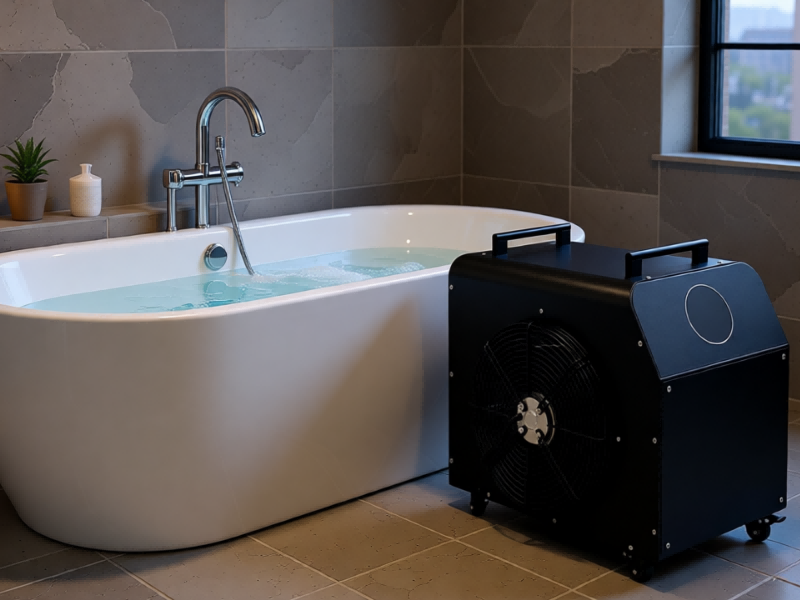
Understanding Ice Bath Chillers: Types and How They Work
Water Chillers vs Heat Pumps: Key Differences for Cold Plunge Use
Picking out an ice bath chiller for home use means knowing what separates regular water chillers from heat pump systems. Water chillers work using a refrigeration process made just for cooling water down. They give pretty good temperature control and cool things much faster than other options, which makes them great for those quick cold plunges people love. Heat pumps do both heating and cooling, sure, but they don't really get things super cold fast. Most folks find their cooling isn't as strong and takes longer to bring water down to desired temps. That's why many prefer heat pumps for spas during all seasons, while water chillers are better when someone needs to keep water around 50 to 59 degrees Fahrenheit consistently for proper cold therapy sessions.
The Refrigeration Cycle: Core Components of Ice Bath Chillers
All ice bath chillers rely on what's called the refrigeration cycle, which involves four main parts working together step by step. First off, the compressor takes refrigerant gas and cranks up the pressure, which makes it hotter. Then this hot gas heads over to the condenser unit where it dumps heat into the room around it. What happens next? The now cooled liquid refrigerant goes through something called an expansion valve, causing its temperature to plummet quite suddenly before it gets to the evaporator section. Inside the evaporator, the cold refrigerant pulls heat away from the water running through the system, effectively bringing down the overall temperature of the ice bath. The whole thing keeps going round and round automatically, so there's no need for anyone to keep adding ice manually. This means we get steady, reliable cooling without all the hassle of traditional methods.
Key Technical Specifications: HP, BTU, and Cooling Capacity Explained
When looking at how well an ice bath chiller works, there are basically three main things worth knowing. First up is horsepower or HP for short. This tells us about the strength of the compressor inside. Most regular sized chillers for home use have somewhere between 0.3 and 1.5 HP, depending largely on how big the tub is. Then we get to British Thermal Units, commonly called BTUs. These basically tell us how much cooling power the unit has. Home models typically put out around 5,000 to 12,000 BTUs each hour. The third thing to consider is cooling capacity, which means simply how many gallons of water the system can actually chill down in one hour. According to what the industry recommends, people should aim for roughly 100 to 150 BTUs per gallon if they want those cold plunge sessions to stay properly chilled without wasting energy. This helps folks pick the right equipment for whatever space they're working with.
Sizing Your Ice Bath Chiller: Matching Cooling Power to Tub Volume
Cooling Load Calculation: BTU Needs Based on Water Volume and Target Temperature
Getting the right size chiller starts with figuring out how much cooling power we need, which depends on the amount of water and how much we want to lower the temperature. When dealing with rectangular tubs, multiply length times width times depth (in inches) then divide by 231 to get gallons. Circular tubs work differently though – take pi multiplied by radius squared, multiplied again by depth, and finally multiply by 7.48. Don't forget to subtract around 15 to 20 gallons because people sitting in the tub will displace some water naturally. To determine the needed BTU per hour, most folks use this calculation: water volume in gallons multiplied by 8.33 (which accounts for water weight), multiplied by the temperature difference wanted, divided by how fast they want things cooled down. Let's say someone wants to cool 100 gallons from room temperature at 70 degrees Fahrenheit down to 40 degrees within two hours. That math works out to roughly 12,500 BTU per hour. This kind of calculation helps ensure the system isn't underpowered or wasting energy unnecessarily.
Weather plays a big role in how much power we need for our pools. Good insulation can cut down on cooling costs by around 40 percent. But when it gets really hot and humid outside, we often see an extra 20 to maybe even 25 percent needed just to keep things comfortable. It's wise to leave some extra capacity in case of unexpected heat coming from pool pumps or direct sunlight hitting the water surface throughout the day. For most home installations ranging between 75 and 200 gallons, folks generally end up needing chillers somewhere between 0.3 and 1.5 horsepower. Of course, exact numbers depend heavily on local climate conditions and what temperature range someone wants to maintain in their pool water.
Choosing the Right Chiller Size: 0.3–0.5 HP vs 1–1.5 HP for Home Use
In moderate climate areas, smaller systems below 100 gallons generally work fine with chillers rated between 0.3 to 0.5 horsepower, which translates roughly to 4,000 to 6,000 BTUs per hour. These can typically get things cooled down to around 50 degrees Fahrenheit. When looking at standard sized tanks ranging from 100 to 200 gallons, most folks find they need something bigger, usually in the 1 to 1.5 horsepower range (about 12,000 to 18,000 BTUs). This kind of setup will reliably bring temps down to 40 degrees. Going too big on the chiller means paying more money upfront and running higher energy bills, but going too small creates problems too. The compressor gets overworked and might not even hit those target temps we're aiming for. Want something that fits just right? Check out what the manufacturers recommend for specific models, or try one of those online calculators that help figure out what size works best based on tank volume and local conditions.
Temperature Control, Performance, and User Experience
Precision Temperature Control: Range and Stability for Cold Therapy
Ice bath chillers today can maintain temperatures right around 39 to 59 degrees Fahrenheit, which is about 4 to 15 Celsius, staying pretty stable within a half degree either way. These machines use things like thermocouples and those other fancy sensors called RTDs to keep track of what's happening in real time. The computer inside then tweaks how much cooling happens without anyone needing to mess with it manually. Getting this kind of accurate temperature control makes sure people get the same therapeutic results every time they use the system. Fluctuations in temperature might actually make whatever health benefits someone is looking for not work as well. A report from the International Society of Automation suggests that when systems are this precise, they tend to last longer and need less fixing over time. Some say maintenance costs drop somewhere around 40%, though actual savings probably depend on how often the equipment gets used.
User Interface and Programmability: Digital Displays and Ease of Use
The digital displays on these systems make things much easier to handle, showing temperatures right now, what the target should be, and how everything else is running at a glance. Most units let people program their own treatment plans too, so they can stick with what works best for them. Better still, certain models come with apps that work on phones, letting folks check in from anywhere or tweak settings when needed. What this all means is nobody needs to be an expert to get the most out of their ice bath sessions anymore. Just point and click, no complicated manuals required.
Cool-Down Time and Recovery Performance During Frequent Sessions
How fast something cools down really matters when someone needs it every day. Most chillers that are appropriately sized can bring around 100 gallons down from normal room temps to about 50 degrees Fahrenheit in roughly 2 to 4 hours give or take, but this varies based on what's going on around them. What matters even more though is how well they recover between sessions. Good quality machines bounce back pretty quickly after each run, keeping things at the right temperature even if someone wants to use them one after another. This kind of reliability means people get their cold therapy when they need it without waiting forever or watching their electricity bill skyrocket.
Home Installation, Electrical Safety, and Energy Efficiency
Installation Requirements: Space, Plumbing, and Ventilation Needs
Getting the installation right is key to making sure everything runs smoothly and stays safe. For most home chillers, there needs to be around a foot to a foot and a half of space around them so they can breathe properly and release heat effectively. Always check what the maker says about how to connect pipes because getting the water flow right at both ends makes a big difference. The air cooled versions we see most often in homes need good ventilation where they're installed otherwise they'll overheat pretty quickly and lose their efficiency. We've seen cases where poor placement led to premature failure just from lack of proper airflow.
Electrical Safety: ETL/UL Certification, GFCI, and Circuit Compatibility
When it comes to electrical safety there simply isn't room for compromise. Look for chillers that carry ETL or UL certifications since these confirm they meet established safety standards. The smaller ones around 0.3 to 0.5 horsepower generally work fine on standard 110 volt circuits protected by 15 to 20 amp breakers. But when dealing with bigger models over 1 horsepower, most need special 220 volt connections with dedicated circuits rated between 30 and 50 amps. For anyone installing chillers outside, GFCI protection becomes absolutely necessary. Even inside spaces, getting those ground fault interrupters installed makes good sense because they help stop dangerous shocks from happening. No matter what kind of setup someone has, bringing in a qualified electrician to check if their existing wiring can handle the power demands of the new chiller remains a smart move.
Energy Efficiency and Eco-Friendly Features: Refrigerants and Insulation
Good energy efficiency design really cuts down on running expenses while being better for the planet. These days most equipment comes with green refrigerants such as R410A instead of those old ones that contributed so much to climate change. The newer systems often feature high EER compressors along with proper insulation and intelligent control systems that work together to limit unwanted heat loss and manage power consumption smarter. Many models now include things like adjustable timers and special eco settings that adjust how long they run based on actual need. This kind of smart operation can save around a third on electric bills when compared to letting them run nonstop all day long.
Cost, Maintenance, and Long-Term Value of Home Ice Bath Chillers
Cost-Effectiveness: Chiller Investment vs Ongoing Ice Purchases
The upfront price tag for an ice bath chiller sits somewhere between $1,000 and $3,000, but most people find they save money in the long run compared to constantly buying bags of ice. Take someone who spends around $500 a month on ice for their recovery routine - they'll typically get their money back within half a year. And let's not forget about power consumption either. When running, these chillers draw between roughly 500 to 1,500 watts, translating to monthly electric bills that rarely exceed $60, often much less than $15 depending on usage frequency. High quality units tend to stick around for anywhere from 5 up to 10 years if maintained properly, so for anyone doing cold therapy regularly, this represents real value over time rather than just another expense.
Noise Levels and Sound-Dampening for Residential Comfort
The noise level from residential chillers is pretty much on par with what people hear from their smaller AC units. But those high end models come with special features like extra insulation that dampens sounds and compressors rated for lower decibels, which cuts down on the annoying background noise. Putting these chillers in locations that are not right next to bedrooms or family rooms makes a big difference too. Some folks even go the extra mile by installing mounts that absorb vibrations, something many contractors recommend. When dealing with places where every bit of noise matters, it pays to pick out a chiller specifically built for quieter operation. These units fit right into any home setup while still delivering all the cooling power needed, no compromises required.
Filtration and Maintenance: Ozone Generators, Inline Filters, and Cleaning
Keeping water clean in chillers really makes a difference for how long they last and keeping people safe when using them. When systems have ozone generators built right in along with those inline filters, they cut down on bacteria growth, stop organic stuff from building up, and actually need fewer chemicals overall. This means we don't have to drain and refill everything as often as before. Most folks find that checking those filters once a month works pretty well, then swapping them out every three months or so. A good deep clean of the whole system usually happens somewhere between three to six months depending on how heavily it gets used day to day. Regular upkeep keeps the cooling working at peak performance, stops pipes from getting blocked up, and most importantly maintains proper hygiene levels even after multiple uses throughout the week.
FAQs
What is the difference between a water chiller and a heat pump for cold plunge use?
Water chillers are specifically designed for rapid cooling during cold plunge sessions, providing fast and effective temperature control. Heat pumps, on the other hand, provide both heating and cooling, but they tend to take longer to reach the desired cooling levels needed for thermotherapy.
How does the refrigeration cycle work in ice bath chillers?
The refrigeration cycle involves four key components: the compressor, condenser, expansion valve, and evaporator. It works by compressing a refrigerant gas, cooling it down, and using it to absorb heat from the water, effectively lowering the water's temperature.
How do I calculate the cooling load needed for my ice bath chiller?
The cooling load calculation involves determining the water volume, desired temperature drop, and the rate at which you want cooling to occur. Commonly, BTUs per gallon are calculated using the water volume, temperature difference, and desired cooling time.
Why is electrical safety important for home ice bath chillers?
Electrical safety ensures that chillers operate efficiently without posing risks of electrical shocks or fires. Look for units with ETL/UL certifications, and consider having a professional electrician evaluate the setup before installation.
How can I ensure energy efficiency and eco-friendliness in my ice bath chiller?
Energy-efficient chillers use eco-friendly refrigerants like R410A and have design features that limit heat loss and manage power consumption intelligently. Look for models with timer settings and eco modes to optimize efficiency.
Table of Contents
- Understanding Ice Bath Chillers: Types and How They Work
- Sizing Your Ice Bath Chiller: Matching Cooling Power to Tub Volume
- Temperature Control, Performance, and User Experience
- Home Installation, Electrical Safety, and Energy Efficiency
- Cost, Maintenance, and Long-Term Value of Home Ice Bath Chillers
-
FAQs
- What is the difference between a water chiller and a heat pump for cold plunge use?
- How does the refrigeration cycle work in ice bath chillers?
- How do I calculate the cooling load needed for my ice bath chiller?
- Why is electrical safety important for home ice bath chillers?
- How can I ensure energy efficiency and eco-friendliness in my ice bath chiller?

